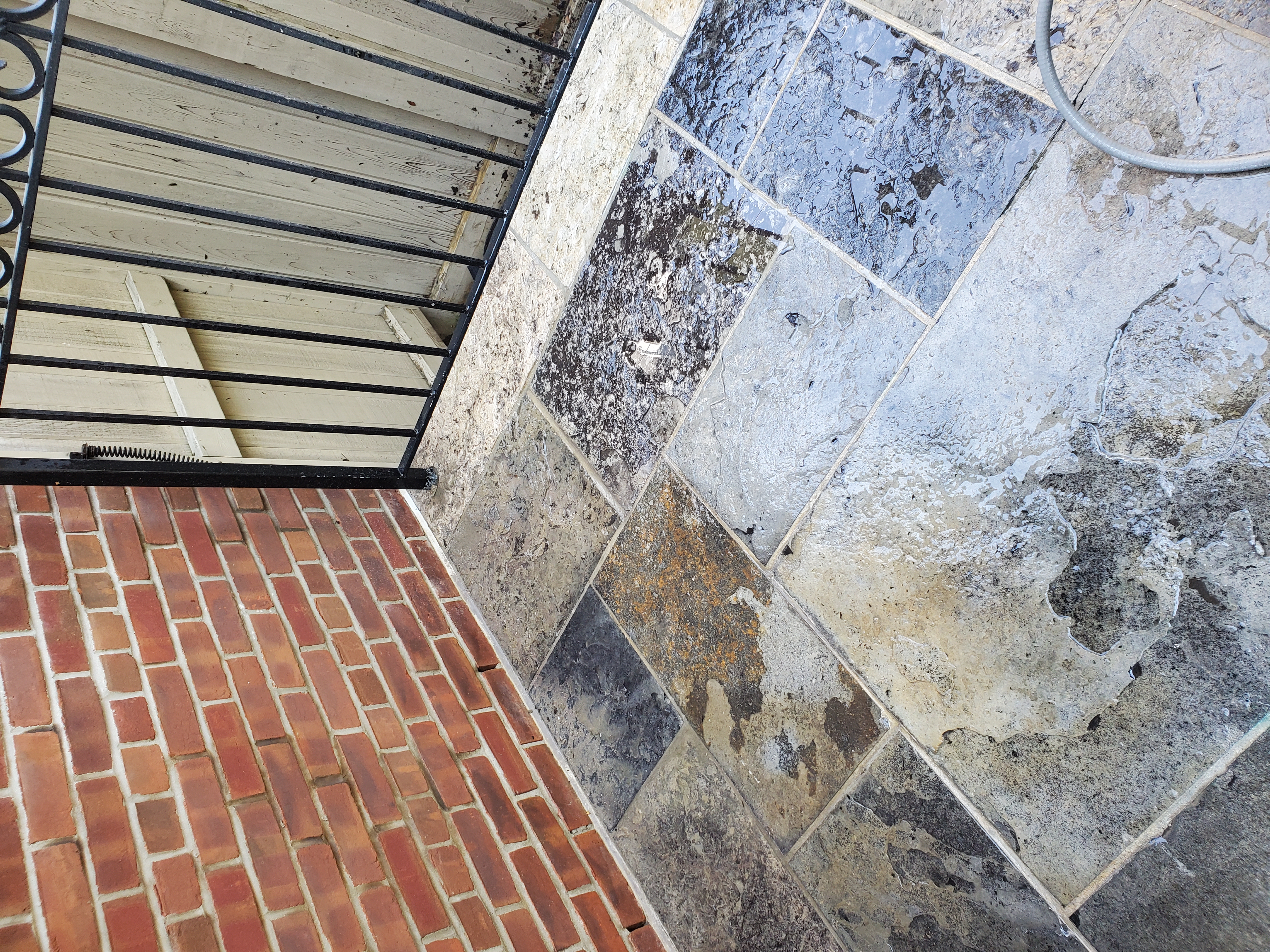
Ontario winters are hard on driveways. By the time the last freeze has passed and the temperature is staying consistently above zero, most GTA driveways are carrying months of accumulated road salt, sand, tire residue, efflorescence, and winter grime. Spring is the right time to address it — but the order in which you do things matters as much as what you do.
Here's the right sequence for spring driveway maintenance in Toronto, whether you have interlock, concrete, or asphalt.
Step 1: Inspect Before You Clean
Before any water touches your driveway, walk it thoroughly and note what you're dealing with. You're looking for:
- New cracks — freeze-thaw cycling opens new cracks every winter. Note their location and width before cleaning begins, since pressure washing can enlarge unrepaired cracks
- Settled or shifted interlock pavers — pavers that have heaved from frost or settled from base erosion need to be reset before sealing
- Efflorescence — white powdery deposits on interlock or concrete indicate moisture movement through the surface. This needs to be addressed with the right cleaner, not just rinsed off
- Weed growth in joints — weeds that have established over winter should be removed root-first before cleaning, not after
- Sealer condition — if you sealed last fall, check whether the sealer is peeling, flaking, or showing delamination. Failed sealer needs to be stripped before resealing
The Right Order of Operations
Remove debris and weeds
Blow or sweep all debris off the surface first. Pull weeds from joints by hand or with a weeding tool — don't rely on pressure washing to dislodge established root systems. Roots left in joints regrow rapidly and cause continued joint erosion.
Apply pre-treatment for stubborn staining
Salt efflorescence, oil stains, and rust stains respond much better to a targeted pre-treatment before pressure washing than to pressure alone. An efflorescence cleaner, a degreaser on oil spots, or an oxalic acid treatment on rust stains should dwell for the manufacturer's recommended time before washing begins.
Pressure wash thoroughly
The main wash removes winter's accumulated grime, the pre-treatment residue, and any loose material from the joints. For interlock, use a surface cleaner attachment rather than a direct lance — it produces more consistent results without striping the surface. Make sure to clean the edges and borders, not just the main field.
Allow to dry completely
This step is where impatience creates problems. Sealer applied over a damp surface fails — it traps moisture under the coating and causes bubbling and delamination within weeks. Wait a minimum of 48 hours after washing before any sealer is applied. In cool, cloudy spring weather in Ontario, 72 hours is safer.
Re-sand interlock joints
For interlock driveways, joint sand lost over winter and during the wash must be replenished before sealing. Polymeric sand — which hardens when wet and resists weed growth — is the right product for this step. Brush it into all joints, compact lightly, and remove all excess from the surface before it sets.
Seal (if due)
Not every driveway needs sealing every spring — a good interlock or concrete sealer typically lasts 2–4 years. If your existing sealer is in good condition, a spring wash is sufficient. If the sealer is worn, failed, or it's been more than 3 years since the last application, spring is an ideal time to reseal before summer traffic and UV exposure begins.
Interlock vs. Concrete vs. Asphalt — What's Different
Interlock
Most maintenance-intensive of the three — needs re-sanding after every thorough wash. Spring is also when interlock that heaved over winter needs to be relevelled. Individual pavers can be lifted, the base adjusted, and the paver reset — this is much easier in spring than during summer when ground has re-compacted. Sealing in spring protects joints through summer weed season.
Concrete
Concrete driveways in the GTA are particularly vulnerable to salt damage. If you notice surface spalling — flaking or pitting of the top surface layer — it's typically the result of repeated freeze-thaw cycling combined with road salt penetration. Spalled concrete can be treated with a concrete resurfacer and sealed, but deep spalling may indicate the need for replacement sections. Spring inspection is the time to catch this before it progresses.
Asphalt
Asphalt driveways should be inspected in spring for new cracking and oxidation. Small cracks should be filled before they widen and allow water infiltration. Asphalt sealcoating, if due, is best done in late spring or summer when temperatures are warm enough for proper curing — not in the cool temperatures of early April in Ontario.
GTA spring timing: The ideal window for driveway cleaning and sealing in Toronto is late April through May — once overnight temperatures are consistently above 5°C and rain isn't forecast for 48 hours. Booking in March or early April gets you the first available spring slots before crews fill up.
Spring Driveway Cleaning
Across Toronto & the GTA
Free on-site quotes for pressure washing, re-sanding, and sealing across Toronto, Vaughan, Mississauga, Brampton, Richmond Hill and the GTA. Spring slots book fast — reach out early.
Request a Free Quote ↗ Call (416) 709-0909