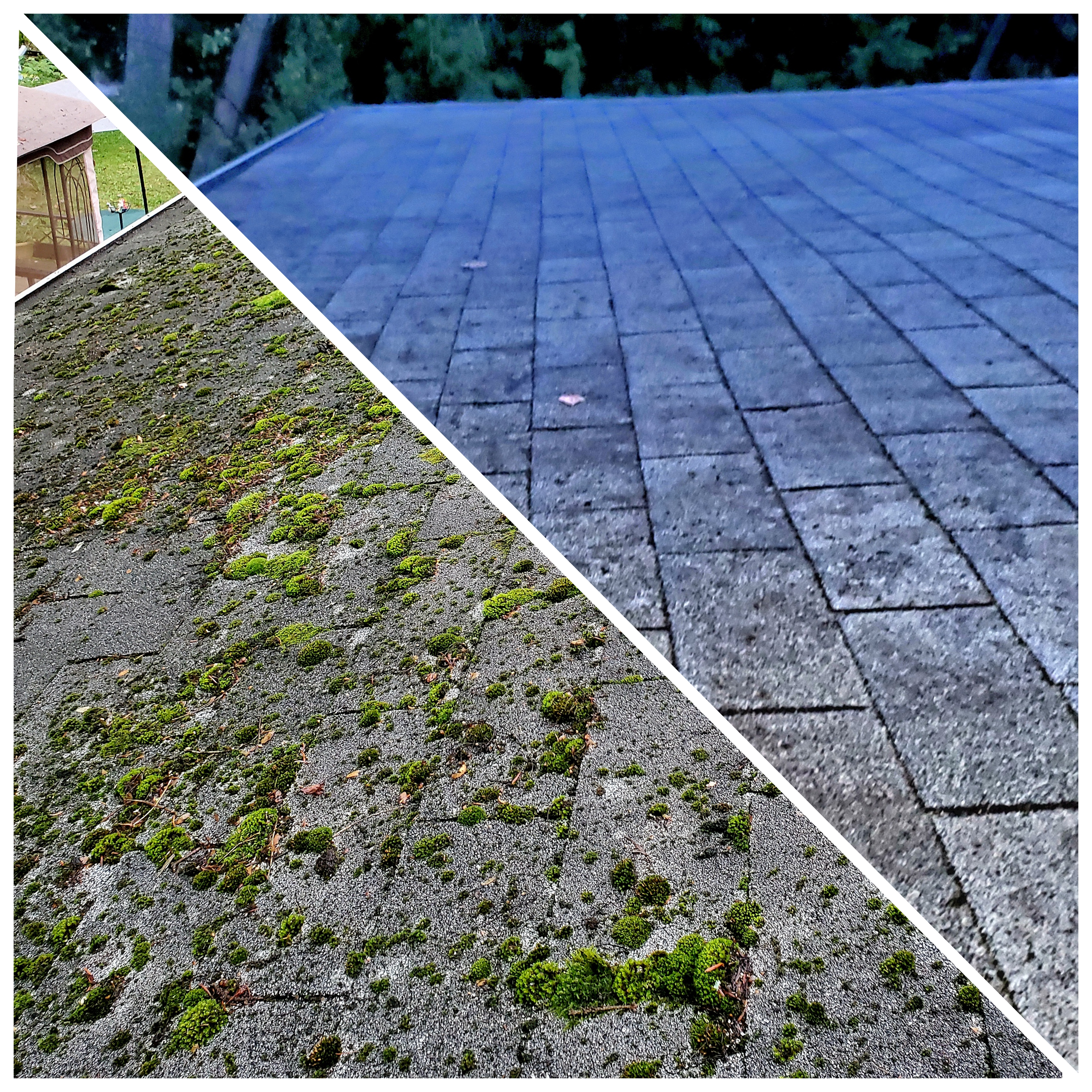
If you've noticed dark streaks running down your roof shingles — especially on the north-facing slopes or in shaded areas — you're not imagining things, and it's not just dirt. Those black streaks are a living organism, and if left untreated, they'll shorten the life of your roof significantly.
Here's what's actually happening, and what can be done about it.
What Causes Black Streaks on Roof Shingles?
The culprit is a cyanobacteria called Gloeocapsa Magma — a type of algae that feeds on the limestone filler used in most asphalt shingles. It spreads through airborne spores, which is why you'll often see it appear on one roof in a neighbourhood and gradually spread to others over the years.
The dark colouring comes from a protective pigment the algae produces to shield itself from UV light. This is why the streaks are dark brown to black, and why they get worse over time if untreated — the pigment thickens as the colony grows.
Beyond appearance, the real problem is what the algae does to your shingles. It feeds on the limestone in the granules, breaking them down over time. Loss of granules means loss of UV protection, faster heat degradation, and ultimately a shorter roof lifespan. What starts as a cosmetic issue becomes a structural one.
Is It Just Algae, or Could It Be Moss or Lichen?
Good question — they're different problems with different solutions.
Algae (Gloeocapsa Magma) — flat, dark streaks running with the slope of the roof. No texture. The most common issue on GTA roofs.
Moss — green, fuzzy growth, usually in shaded areas. Moss holds moisture against the shingles and can lift shingle edges, allowing water infiltration. More damaging than algae if left long-term.
Lichen — a combination of algae and fungus that forms a crusty, grey-green growth. The hardest to remove — lichen attaches with root-like structures called rhizines that penetrate the shingle surface.
All three can be treated, but lichen requires more aggressive treatment and more dwell time for the cleaning solution.
The Right Way to Clean a Roof — Soft Washing
This is where homeowners often make a costly mistake: using a pressure washer.
High-pressure washing damages asphalt shingles. Shingles are coated with granules that protect the asphalt underneath from UV degradation. Pressure washing blasts these granules off the surface — the same granules that the algae is feeding on. You end up with a clean-looking roof that now has accelerated wear and a voided manufacturer warranty.
The correct method is soft washing — a low-pressure application of a biodegradable cleaning solution that kills the algae, moss, and lichen at the root. The solution does the work, not the pressure. A proper soft wash:
- Uses water pressure low enough not to dislodge granules (typically under 100 PSI)
- Applies a sodium hypochlorite-based solution diluted to the appropriate concentration for the growth type
- Allows appropriate dwell time for the solution to penetrate and kill the organism
- Rinses thoroughly to remove dead material without damaging shingles
Important: The cleaning solution used in soft washing is effective but needs to be handled carefully around landscaping, painted surfaces, and gutters. A professional service will protect surrounding plants and materials before applying — this is not a job to rush through.
How Long Does Roof Cleaning Take?
A typical residential soft wash in the GTA takes 2–4 hours depending on roof size, pitch, and the extent of growth. Some moss and lichen growth may require a second application or a longer dwell time. After cleaning, some residual staining may fade gradually over the following weeks as rain washes away dead material — this is normal and expected.
How Often Should You Clean Your Roof?
In the GTA's climate — humid summers, wet springs, and shaded neighbourhoods — most roofs benefit from cleaning every 3–5 years. Roofs with heavy tree coverage or north-facing exposure may need attention more frequently.
The best time to clean is spring or early fall, when temperatures are moderate and the roof has been through a winter of growth accumulation.
Can You Prevent It Coming Back?
Yes, to a degree. After cleaning, a preventative treatment can be applied that slows re-growth significantly — essentially a residual biocide that continues working after the initial clean. Zinc strips installed at the ridge are a longer-term preventative measure; rainwater picks up zinc ions and carries them down the roof, inhibiting algae growth.
Neither method prevents growth permanently, but both meaningfully extend the time between cleanings.
When to Call a Professional
Roof cleaning involves working at height with chemical solutions — this is not a typical DIY job. Beyond the safety risks, incorrect chemical concentrations can damage shingles or kill surrounding plants. A professional service brings the right equipment, the right dilution ratios, and the experience to protect your property throughout the process.
If your roof has visible streaks, moss, or lichen, it's worth getting a quote. The cost of a professional clean is a fraction of a premature roof replacement — and your curb appeal will thank you immediately.
Free Roof Cleaning Quote
Across the GTA
Soft-wash roof cleaning for homes across Toronto, Vaughan, Mississauga, Brampton, Richmond Hill and the GTA. Free on-site estimates, no obligation.
Request a Free Quote ↗ Call (416) 709-0909