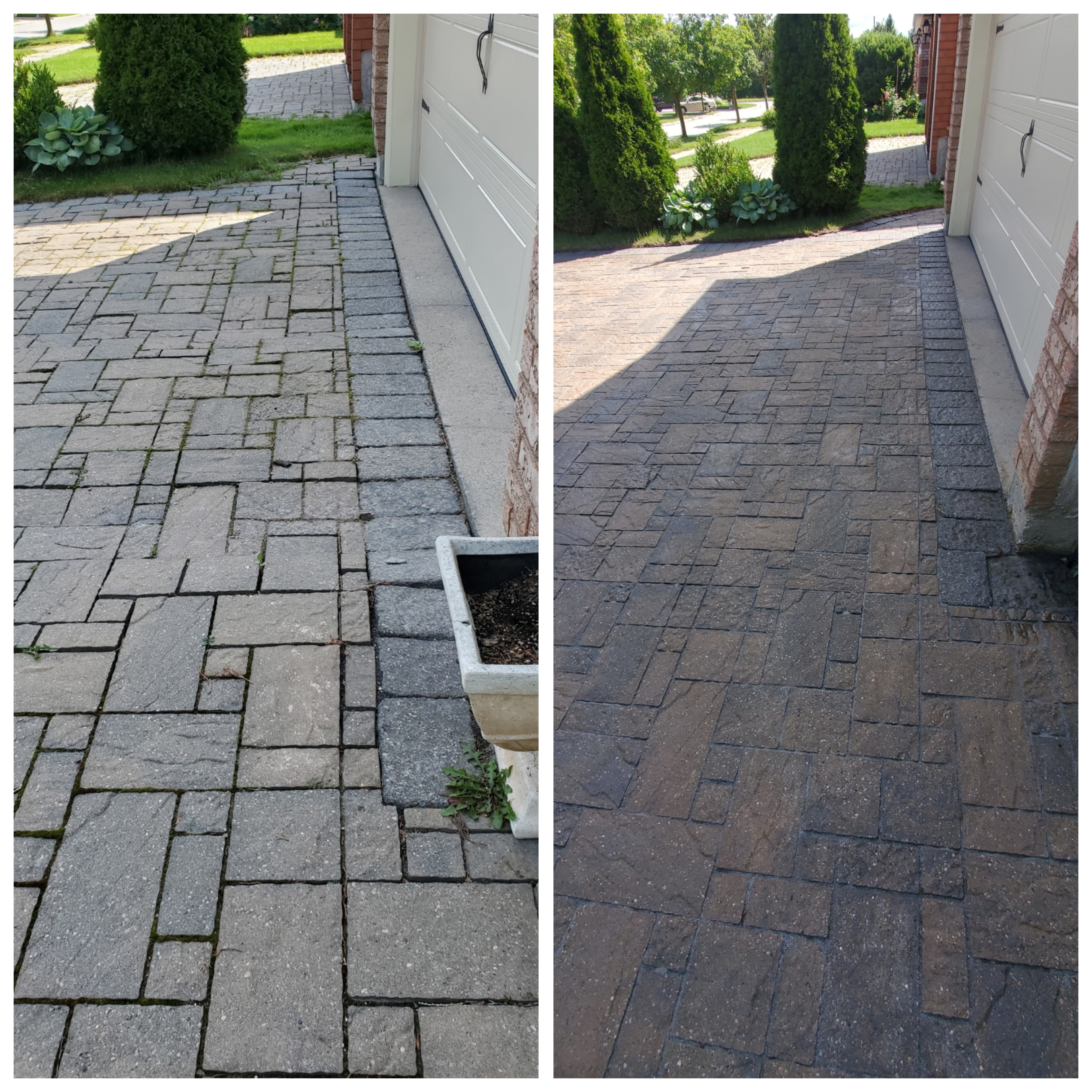
If you have an interlock driveway in the GTA, you already know it's one of the best investments you can make for your home's curb appeal. But after a few Ontario winters — road salt, freeze-thaw cycles, weeds pushing through the joints, and general grime buildup — even the nicest interlock can look worn out and neglected.
The good news: most interlock cleans up beautifully. The difference between a driveway that looks like it needs replacing and one that looks brand new is often just a proper cleaning. Here's what actually works.
Why Interlock Gets So Dirty in Ontario
The GTA's climate is hard on driveways. Winter road salt leaves behind white efflorescence deposits. Moisture gets into the joints, growing moss, algae, and weeds. UV exposure fades the colour. Vehicle drips leave oil stains. By spring, even a well-maintained interlock driveway can look a decade older than it is.
The joints between pavers are especially vulnerable — they trap dirt, seeds, and organic matter, which leads to weed growth and joint erosion over time.
What You'll Need to Clean Interlock Yourself
If you want to tackle it yourself, here's the honest rundown:
- A pressure washer — minimum 2,000 PSI. Consumer models from hardware stores are borderline; professional units at 3,000–4,000 PSI do significantly better work
- A surface cleaner attachment — gives a more even clean than a wand alone and avoids striping
- A patio/driveway cleaner solution — for algae, moss, and efflorescence
- A stiff brush — for pre-treating stubborn spots and joints
- Polymeric sand — to refill joints after cleaning if the sand has been displaced
The Right Way to Clean Interlock
Step 1: Remove weeds and debris first
Pull weeds by hand or use a weed removal tool before washing. Trying to blast weeds out with pressure alone can damage the joint sand and dislodge pavers.
Step 2: Pre-treat stains
Apply a driveway cleaner or degreaser to oil spots and let it dwell for 10–15 minutes before washing. Don't skip this — pressure alone rarely removes set-in oil stains.
Step 3: Pressure wash at the right angle
Keep the nozzle at a consistent 45-degree angle and maintain a steady distance of 6–8 inches from the surface. Never spray directly into the joints — this blasts out the sand and destabilizes the pavers. Work in sections, rinsing as you go.
Step 4: Re-sand the joints
After washing, the joints will likely need fresh polymeric sand. Sweep it in dry, compact it, and lightly mist with water to activate. This step is critical — without proper joint sand, weeds grow back faster and pavers can shift.
Step 5: Seal (optional but recommended)
Sealing after cleaning protects against future staining, slows efflorescence, and enhances the colour. It's not always necessary, but on a clean driveway it's excellent value — especially on newer interlock.
GTA tip: Don't clean interlock if rain is forecast within 24 hours or if temperatures are below 5°C. If you're sealing, you need a minimum of 48 hours of dry weather. Ontario spring weather can be unpredictable — plan accordingly.
Common Mistakes That Damage Interlock
- Too much pressure on the joints — blasts out sand, leads to shifting and weed re-growth
- Wrong nozzle — a 0-degree nozzle can etch and pit the surface of softer pavers
- Sealing dirty interlock — sealing before cleaning traps dirt and stains underneath the sealer permanently
- Skipping the re-sanding — the most commonly skipped step, and the one that causes the most callbacks
- Using bleach — can discolour pavers and kill surrounding plants
When to Call a Professional
DIY cleaning makes sense for small patios or lightly soiled driveways. But for most full driveway cleans in the GTA — especially if you want sand and seal included — a professional service is worth the cost. Here's why:
- Professional equipment operates at 3,500–4,000 PSI with hot water capability, removing what consumer washers can't
- A proper wash, sand, and seal job typically takes 1–3 days with professional equipment versus a full weekend of DIY effort
- Professionals know exactly how much pressure different paver types can handle — softer limestone and tumbled pavers require a much gentler approach than concrete pavers
- The polymeric sand and sealer products available to contractors are higher quality than what's sold at home improvement stores
If your driveway hasn't been cleaned in more than 2–3 years, has significant efflorescence or organic growth, or you want a wash, sand, and seal — getting a professional quote is almost always the better call.
How Much Does Interlock Cleaning Cost in the GTA?
Costs vary based on the size of the area, the condition of the interlock, and whether sanding and sealing are included. A standard two-car driveway wash-only typically runs less than a full wash, sand, and seal package — but the latter provides dramatically longer-lasting results. Always get a written quote before any work begins.
Get a Free Quote from
416Marvel
We service interlock driveways across Toronto, Vaughan, Mississauga, Brampton, Richmond Hill and the GTA. Free on-site estimates, no obligation.
Request a Free Quote ↗ Call (416) 709-0909