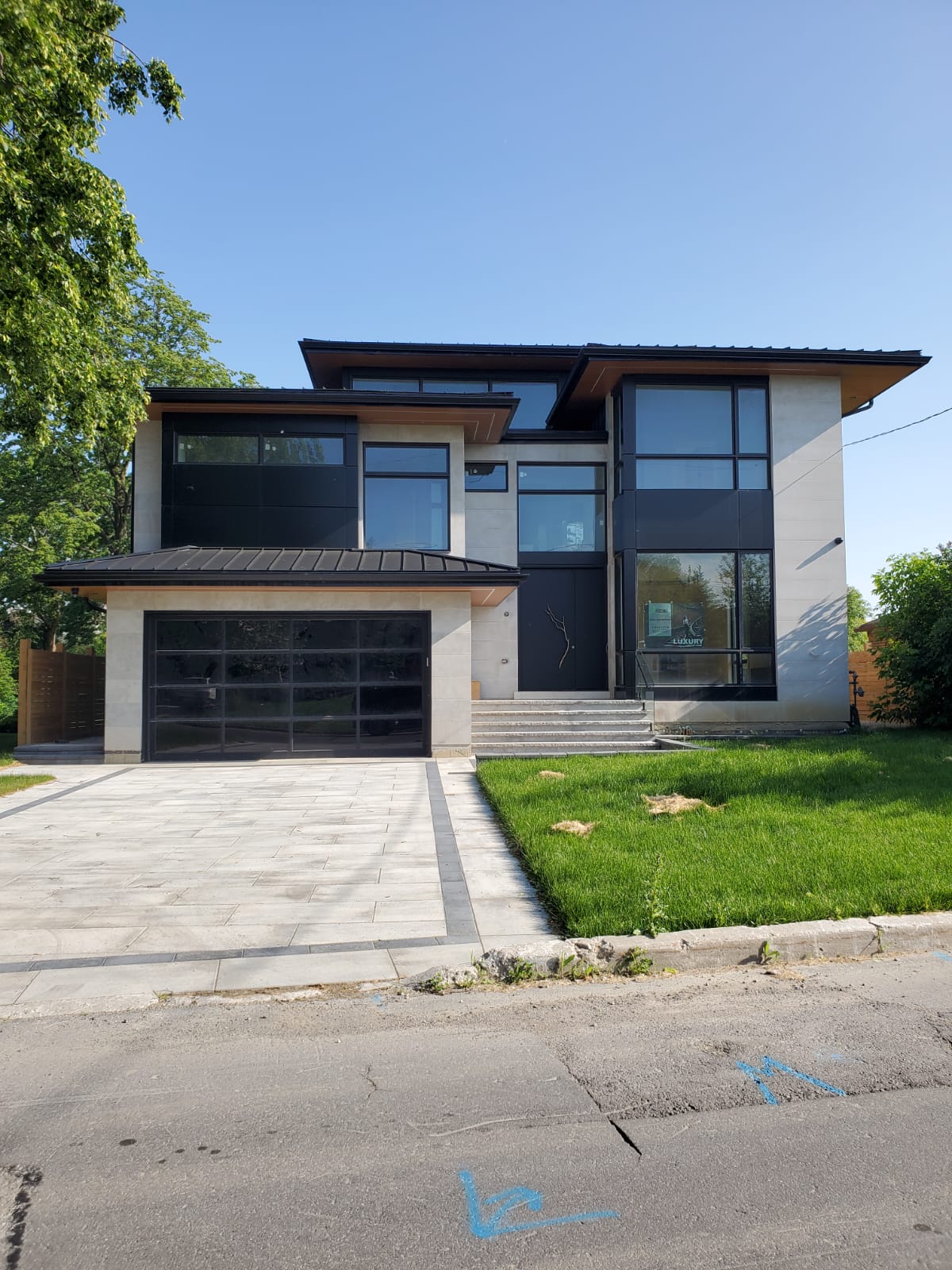
That dark streaking or green film on your home's siding is one of the most common things GTA homeowners notice when they look at their house after a long Ontario winter. Most people assume it's just dirt. It isn't. It's a living organism — and it's actively affecting your siding, your paint, and your home's long-term maintenance costs.
Here's what's actually growing on your siding, why it matters beyond aesthetics, and what professional house washing in Toronto involves.
What's Actually on Your Siding
Green film — Algae
The most common culprit. Algae thrives in moisture and shade, which is why it appears first on north-facing walls and under roof overhangs. In Toronto's humid spring and wet fall, algae can establish quickly on virtually any exterior surface — vinyl, brick, stucco, and painted wood all support algae growth. Algae itself doesn't damage most siding materials directly, but it retains moisture against the surface and creates conditions that accelerate deterioration of paints and sealers.
Black streaking — Mould or mildew
Black or dark grey streaking that runs vertically is typically mould or mildew. Unlike algae, mould actively degrades organic materials — it's a real concern on wood siding and trim. On vinyl and brick, mould is primarily a cosmetic and hygiene issue, but on painted wood surfaces, mould penetrates the paint film and causes it to lose adhesion and fail prematurely.
White or chalky deposits — Efflorescence
White, powdery deposits on brick or stucco are efflorescence — mineral salts being drawn out of the masonry by moisture movement. It's not a biological growth, but it's a sign that moisture is moving through the wall assembly. Efflorescence should be addressed and the source of moisture investigated, particularly if it's appearing on interior walls or around windows.
Why It Matters Beyond Appearance
Paint degradation. Algae and mould growing beneath or within the paint film cause it to lose adhesion and fail. Repainting over contaminated surfaces without cleaning first results in premature paint failure — often within a season or two. A proper house wash before any exterior painting dramatically extends the life of the new coat.
Siding deterioration. Wood siding with active mould growth deteriorates faster than clean wood. The mould breaks down the surface fibres, making the wood more porous and susceptible to moisture infiltration. On cedar and pine siding, regular cleaning is a meaningful part of long-term maintenance.
Curb appeal and property value. A home with visibly green or stained siding gives a poor first impression — to visitors, to neighbours, and to potential buyers. In a GTA real estate market where first impressions matter, a clean exterior is a low-cost, high-impact improvement.
What Professional House Washing Involves
Soft washing vs. pressure washing
This distinction is important and often misunderstood. Soft washing uses low pressure — comparable to a garden hose — combined with a biodegradable cleaning solution that kills algae, mould, and mildew at the root. The chemical does the work, not the water pressure.
High-pressure washing on house exteriors is a mistake on most siding types. Vinyl siding can be forced out of its channels. Painted surfaces can be stripped. Stucco can be cracked or pitted. Even brick mortar can be eroded by sustained high pressure at close range. A reputable house washing company in Toronto uses soft wash techniques on all painted and siding surfaces.
Pre-treatment
A biodegradable cleaning solution — typically sodium hypochlorite at the appropriate dilution for the surface type — is applied to the siding and allowed to dwell. This kills the biological growth at its source rather than just rinsing it off the surface. Growth that is simply rinsed off without chemical treatment returns faster because the root structure remains.
Rinse and inspection
After dwell time, the siding is rinsed thoroughly at low pressure. Eavestroughs, soffits, fascia, and window frames are typically cleaned as part of a full house wash. A walkthrough inspection after rinsing confirms any areas that need a second application.
How Often Should You Wash Your House in Toronto?
Most GTA homes benefit from a house wash every 2–3 years. Homes with heavy tree coverage, north-facing walls with limited sun, or in areas with high seasonal humidity may need attention more frequently. The best indicator is visual — if you can see green film or dark streaking from the street, it's time.
Before you paint: If you're planning to repaint your home's exterior, a professional house wash is not optional — it's the most important prep step. Painting over contaminated or dirty siding is the leading cause of premature exterior paint failure in the GTA. Clean surface first, paint second.
Professional House Washing
Across Toronto & the GTA
Soft-wash house washing for vinyl, brick, stucco, and painted wood siding across Toronto, Vaughan, Mississauga, Brampton, Richmond Hill and the GTA. Free on-site quotes.
Request a Free Quote ↗ Call (416) 709-0909