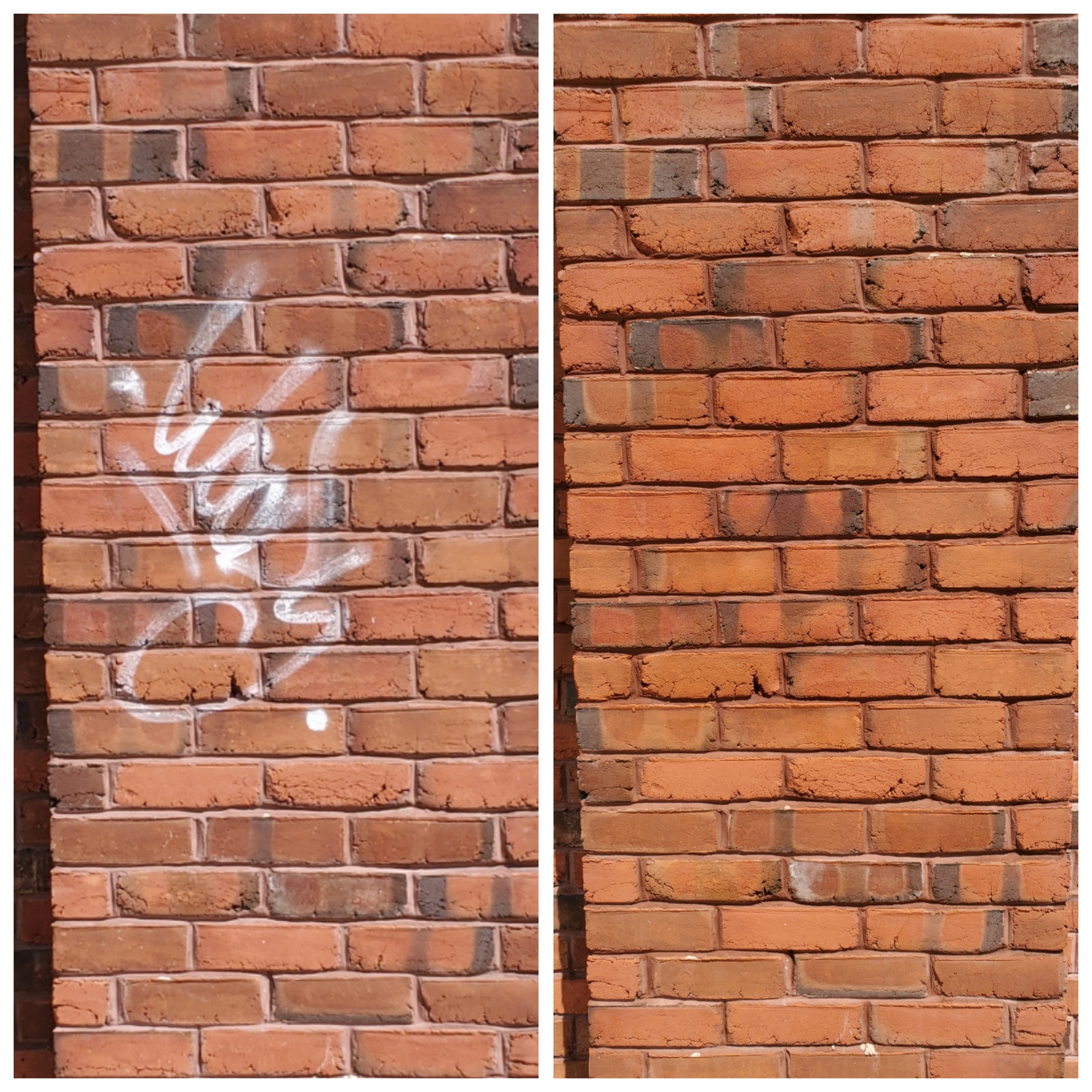
Graffiti on your property is frustrating — and the clock starts the moment it appears. Studies consistently show that graffiti left in place attracts more graffiti within days. The longer it stays, the deeper it sets into porous surfaces, and the harder it becomes to remove without damaging the underlying material.
But rushing the removal can cause just as much damage as waiting. Pressure washing brick with the wrong nozzle, using solvent on a painted surface, or applying a generic graffiti remover to polished stone can permanently alter the surface texture, fade the surrounding finish, or etch the material. Here's what actually works, by surface type.
Why Graffiti Removal Is Surface-Specific
Graffiti paint — typically aerosol spray paint — bonds chemically with whatever it lands on. The challenge is breaking that bond without damaging the substrate. Different surfaces have fundamentally different tolerances for the chemicals and mechanical force required to remove paint.
Brick and concrete are porous and can handle stronger chemical treatments but are vulnerable to high-pressure washing at close range. Painted surfaces require chemical removal that lifts the graffiti without stripping the underlying paint. Metal and glass are non-porous and often the easiest to clean, but scratching is a real risk. Each requires a different approach.
Removal by Surface Type
Brick and Masonry
The most common surface for graffiti in Toronto. A chemical graffiti remover — typically a gel-based solvent that dwells on the surface and breaks down the paint chemistry — is applied first. After dwell time, the surface is rinsed with moderate pressure. Multiple applications are often needed for older or deeply set paint. High pressure alone without chemical pre-treatment is ineffective and damages mortar joints and brick faces over time.
Concrete
Similar approach to brick — chemical pre-treatment followed by pressure washing. Concrete is more uniform in porosity than brick, which often makes removal more predictable. Rough or textured concrete holds paint more stubbornly than smooth concrete. In some cases, light sandblasting or soda blasting is more effective than water-based pressure washing for heavily saturated concrete.
Painted Surfaces (Walls, Fences, Doors)
This is where DIY attempts most often go wrong. Solvent-based removers will lift graffiti paint — but they'll also strip or fade the underlying paint. The correct approach is to use a water-based paint stripper designed for graffiti, applied precisely to the tagged area and neutralised quickly. In many cases on painted wood or metal, repainting the surface after removal produces a cleaner result than trying to chemically remove the graffiti alone.
Metal (Gates, Roller Doors, Signage)
Metal surfaces are non-porous, which means graffiti sits on the surface rather than penetrating it. A solvent-based remover — acetone, mineral spirits, or a commercial graffiti remover — applied with a cloth or soft brush lifts most spray paint cleanly. Avoid abrasive scrubbing pads, which scratch the metal surface. Pressure washing alone is largely ineffective on metal without chemical pre-treatment.
Glass and Windows
Graffiti on glass is usually removable with a razor blade at 30 degrees and a solvent cleaner, provided the glass hasn't been scratched or acid-etched. Spray paint on glass is relatively straightforward. Acid etching — a separate type of graffiti that chemically frosts the glass surface — cannot be removed. Affected glass panels typically need replacement.
Natural Stone (Limestone, Sandstone, Granite)
Natural stone is among the most challenging and most easily damaged substrates. Acidic cleaners damage limestone and sandstone permanently. High pressure can pit and erode soft stone surfaces. Removal requires pH-neutral poultice-based graffiti removers applied gently — and even then, some staining may remain in highly porous stones. Professional assessment before attempting any removal is strongly recommended.
Act Fast — But Not Recklessly
Speed matters. Fresh spray paint that hasn't fully cured is significantly easier to remove than paint that has been on the surface for weeks. On porous surfaces like brick and concrete, paint continues to penetrate deeper into the substrate over time as it cures and as rain drives it inward.
That said, acting fast doesn't mean acting without the right products. Applying the wrong chemical to the wrong surface in a hurry causes damage that may be impossible to reverse — and replacing a section of brick, a section of stone cladding, or a glass panel costs far more than a professional removal service.
Avoid: Bleach on brick or masonry — it doesn't remove graffiti and leaves a white residue. Wire brushes on any decorative surface — causes surface damage that's permanent. High-pressure washing as the first step without chemical pre-treatment — drives paint deeper into porous surfaces.
Anti-Graffiti Coatings — Worth It?
If your property has been tagged more than once, an anti-graffiti coating is worth serious consideration. These coatings come in two types:
Sacrificial coatings — a clear, wax-based layer that graffiti bonds to instead of the substrate. When graffiti appears, the coating and graffiti are removed together with hot water, and a new coat is reapplied. Good for frequently targeted surfaces.
Permanent coatings — a harder, non-sacrificial barrier that prevents paint from bonding to the substrate. Graffiti wipes off with solvent without removing the coating. Higher upfront cost but lower ongoing maintenance.
For commercial properties and buildings in high-traffic Toronto areas that are repeat targets, a permanent anti-graffiti coating applied after initial removal is a meaningful long-term investment.
Reporting to the City of Toronto
Toronto has a Graffiti Management Program — property owners are legally required to remove graffiti within a set timeframe after being notified by the city. The program also has resources for property owners dealing with repeat vandalism. If your property has been tagged, documenting it photographically before removal and reporting it to Toronto 311 is good practice regardless of whether you use the city's resources.
Fast Graffiti Removal
Across Toronto & the GTA
We remove graffiti from brick, concrete, metal, painted surfaces and more — with the right chemical treatment for each surface. Same or next-day response available. Free quotes across the GTA.
Request a Free Quote ↗ Call (416) 709-0909