If you're researching garage floor options in the GTA, you've likely come across both epoxy coatings and polished concrete. They're the two most popular choices for homeowners who want a finished, professional-looking garage floor — and both have genuine merit. The right choice depends on your priorities, your budget, and how you use the space.
Here's a straightforward comparison to help you decide.
What's the Difference?
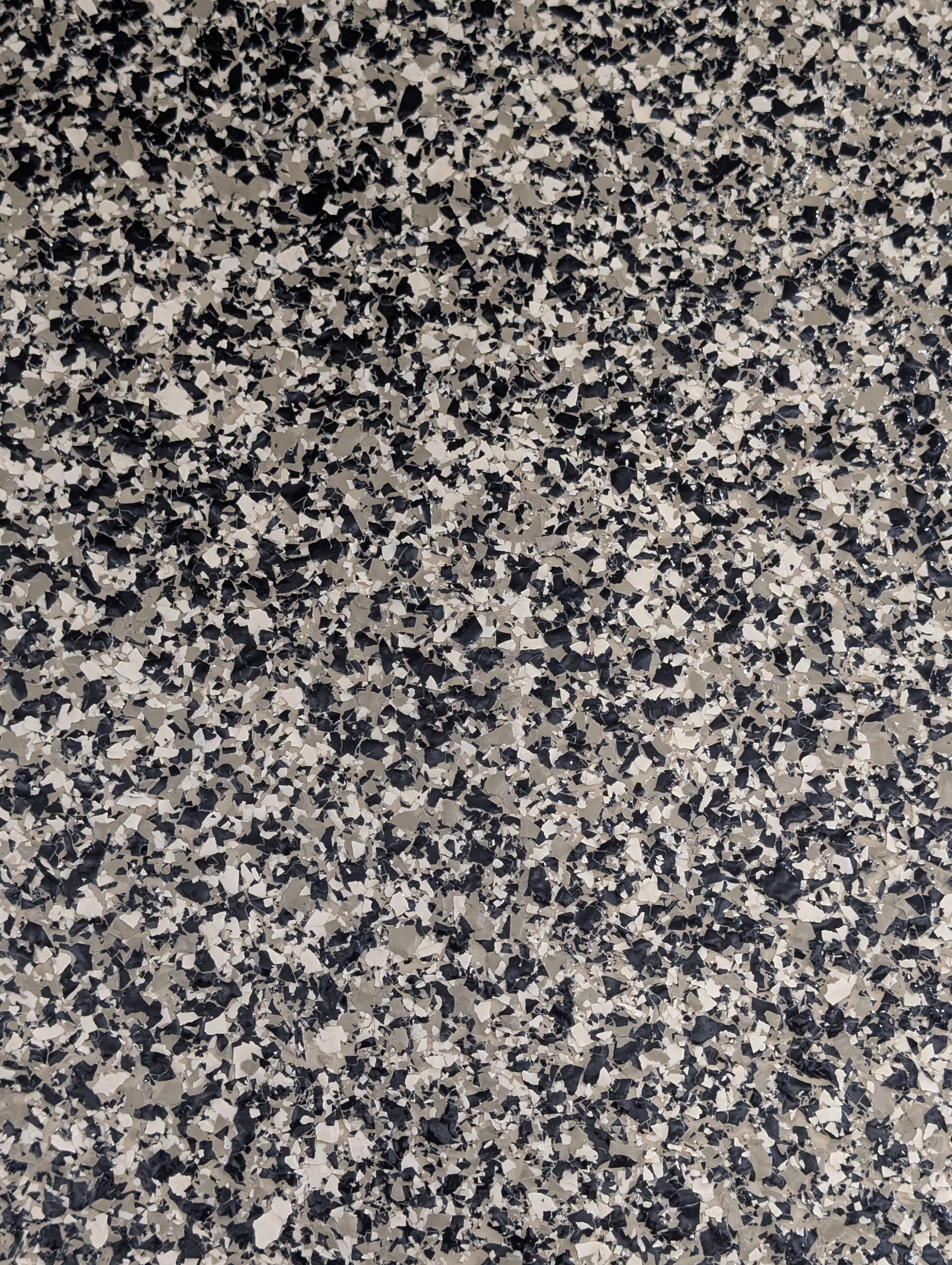
Epoxy flooring is a coating system applied on top of the concrete. It consists of one or more layers of epoxy resin — with optional decorative elements like metallic pigments, vinyl flake chips, or quartz aggregate — topped with a protective polyaspartic finish coat. The concrete beneath is ground and prepared, but the epoxy sits on top of it as a distinct layer.
Polished concrete involves grinding and mechanically refining the concrete surface itself using progressively finer diamond tooling until the surface achieves a smooth, reflective finish. No coating is applied — the concrete is the floor. A penetrating sealer or densifier is typically applied to improve stain resistance, but it soaks into the concrete rather than sitting on top.
Side-by-Side Comparison
| Factor | Epoxy | Polished Concrete |
|---|---|---|
| Upfront cost | Moderate | Higher (more equipment-intensive) |
| Lifespan | 5–10 years (residential) | 15–20+ years (with resealing) |
| Colour & finish options | Extensive — metallic, flake, quartz, solid | Limited — grey tones, natural aggregate |
| Repairability | Difficult to repair seamlessly | Easier — can be reground and repolished |
| Ontario winter / salt resistance | Excellent with polyaspartic topcoat | Good with proper sealer — needs resealing |
| Hot tire pickup | Can occur on lower-quality systems | Not an issue |
| Slip resistance | High (flake/quartz systems) | Moderate — can be slippery when wet |
| Maintenance | Low — sweep and mop | Very low — sweep and mop, reseal every few years |
| Installation time | 1–2 days | 2–4 days |
| Concrete condition requirement | Moderate — prep covers imperfections | Higher — imperfections show through |
Where Epoxy Wins
Colour and customisation
If you want a specific look — a metallic swirl, a custom flake colour blend, or a floor that makes a visual statement — epoxy is the clear winner. Polished concrete is inherently limited to the natural tones of the concrete itself, which means varying shades of grey with the occasional aggregate peek-through. Beautiful in its own way, but not customisable.
Covering imperfections
Older concrete with staining, pitting, or surface imperfections is a better candidate for epoxy. The coating covers and fills minor surface issues. Polished concrete, by contrast, reveals everything — stains, aggregate inconsistencies, and repairs are all visible in a polished floor.
Faster turnaround
A standard epoxy system in a residential garage can typically be walked on within 24 hours and driven on within 48–72 hours. Polished concrete takes longer due to the multiple grinding passes required.
Where Polished Concrete Wins
Long-term durability
Polished concrete is the concrete itself — there's no coating to peel, chip, or delaminate. With periodic resealing, a polished concrete floor in a residential garage can last decades with minimal intervention. Epoxy coatings will eventually need to be recoated, typically within 5–10 years in a vehicle-use environment.
Hot tire resistance
Hot tire pickup — where the coating softens and pulls up when a hot vehicle parks on it — is a known failure mode for lower-quality epoxy systems. It's not an issue with polished concrete. For homeowners who park vehicles daily and want to set and forget, polished concrete has a meaningful advantage here.
Repairability
If a section of polished concrete is damaged, it can often be reground and refinished. Repairing a section of epoxy without visible seams is very difficult — extensive damage typically requires full recoating.
The Ontario Climate Factor
GTA garages face a specific challenge: road salt. Salt tracked in from Ontario winters is corrosive to many floor systems. Both epoxy and polished concrete handle this well when properly installed and sealed, but the key word is properly. A standard epoxy topcoat can degrade faster under heavy salt exposure; a UV-stable polyaspartic topcoat is the right specification for a Toronto garage. Similarly, polished concrete needs a penetrating sealer rated for chloride resistance.
Bottom line: Epoxy is the better choice if you want colour options, a faster install, and a lower upfront cost. Polished concrete is the better choice if you prioritise maximum longevity, zero coating failure risk, and a minimalist aesthetic. Both are excellent floors when properly installed.
Which One Should You Choose?
For most GTA homeowners finishing a residential garage, epoxy is the practical choice — it offers more visual options, lower cost, and excellent durability for the vast majority of use cases. The 5–10 year recoating cycle is manageable, and the variety of systems available means you can choose something that genuinely reflects the space you want.
If you're investing in a high-end finished garage that you want to maintain for 20+ years with minimal intervention, or you specifically want the natural concrete aesthetic, polished concrete is worth the higher upfront cost.
Either way, the single most important factor is installation quality. Both systems fail quickly when surface preparation is skipped. With proper prep and the right materials, both will serve you well for years.
Free Floor Assessment
Across the GTA
We'll assess your garage floor, discuss your goals, and recommend the right system for your space. Serving Toronto, Vaughan, Mississauga, Brampton, Richmond Hill and the GTA.
Request a Free Quote ↗ Call (416) 709-0909