It's one of the most common questions GTA homeowners ask before starting a basement renovation: do I actually need a permit? The short answer is almost certainly yes — but the full answer is worth understanding, because the consequences of getting it wrong are more significant than most people realise.
The Short Answer: Yes, in Most Cases
Under the Ontario Building Code, a building permit is required whenever you're creating new living space, adding or altering structural elements, or installing or modifying mechanical systems. Finishing a basement almost always triggers at least one of these conditions.
Specifically, a permit is required in Ontario when basement work involves:
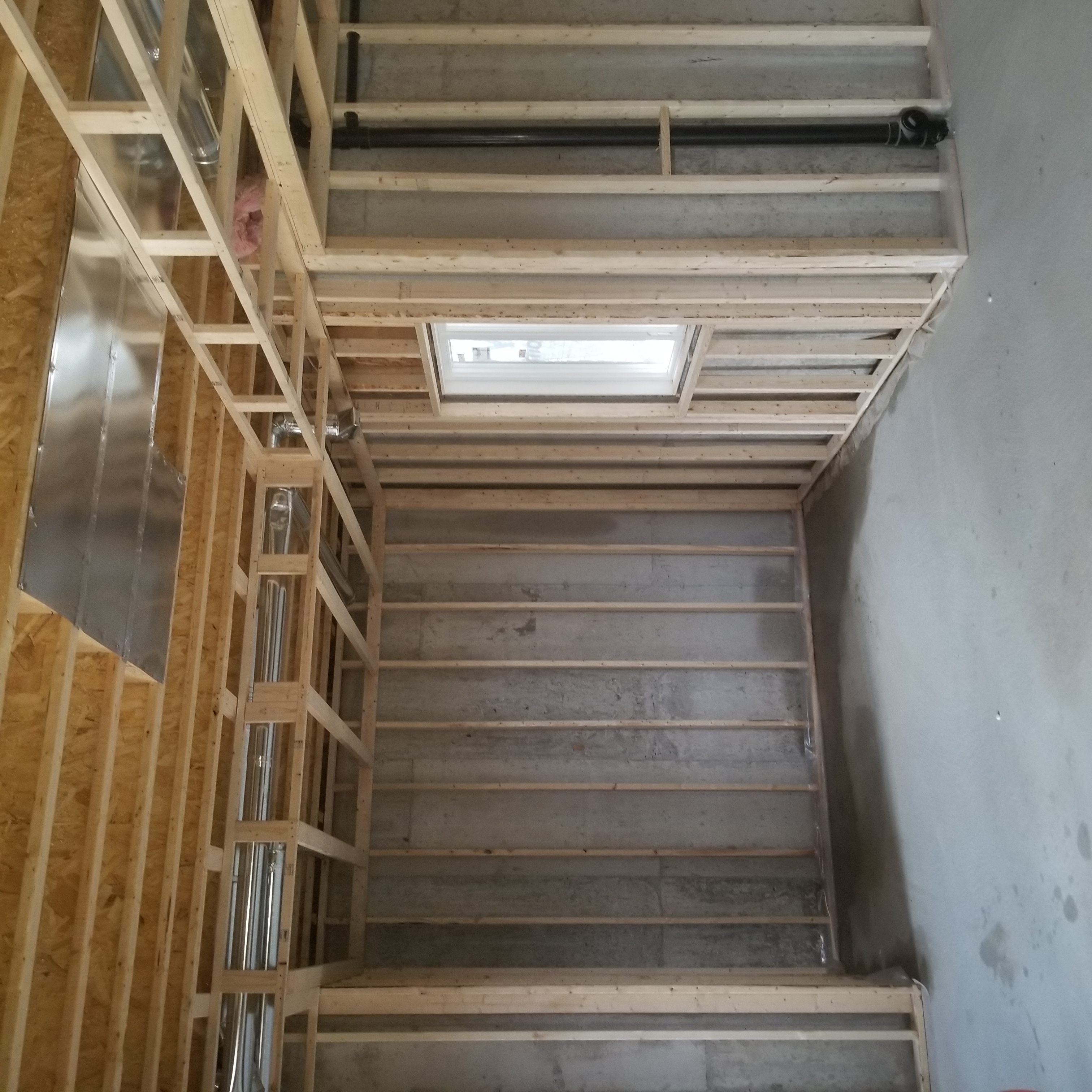
- Framing new walls — whether perimeter walls or interior partitions
- Adding a bedroom — bedrooms have specific egress and ventilation requirements under the Building Code
- Adding a bathroom — any new plumbing rough-in requires a permit
- Electrical work — adding circuits, panels, or outlets requires an electrical permit
- Creating a secondary suite — a basement apartment has additional requirements including separate entrances, fire separations, and egress windows
In practical terms, if you're finishing your basement beyond painting and flooring — if walls are going up and rooms are being created — you need a permit.
What Doesn't Require a Permit
Not every basement project requires a permit. Work that typically doesn't require one includes:
- Painting and decorating
- Installing flooring on an existing finished floor
- Replacing fixtures like light switches or outlets (no new circuits)
- Minor repairs that don't affect structure or systems
If you're not sure whether your specific project requires a permit, the safest approach is to call your local building department and describe what you're planning. It's a free phone call and takes ten minutes.
What Happens If You Skip the Permit?
This is where the stakes get real. Finishing a basement without the required permit creates several serious problems:
When you sell your home
Real estate lawyers and home inspectors look for unpermitted work. When they find it, it becomes a negotiation issue — buyers can demand a price reduction, require the work to be retroactively permitted (which sometimes means opening walls for inspection), or walk away entirely. In the GTA market, where finished basements add significant value, unpermitted work can cost you far more at sale than the permit cost you upfront.
Insurance claims
If a fire, flood, or structural issue occurs in an area with unpermitted work, your insurer has grounds to deny the claim. This is not a hypothetical risk — it happens. Unpermitted electrical work is particularly problematic from an insurance standpoint.
Bylaw enforcement
Municipalities in the GTA do enforce unpermitted construction, particularly for basement apartments. If a neighbour complains or a routine inspection uncovers unpermitted work, you can be ordered to stop work and potentially ordered to remove it.
Important: The cost of retroactively permitting unpermitted work is almost always higher than doing it right the first time — sometimes significantly higher, if walls need to be opened for inspection. This is not a corner worth cutting.
How the Permit Process Works in the GTA
Step 1: Prepare drawings
Most municipalities require simple floor plans showing the proposed layout — room dimensions, door and window locations, and egress window sizes for bedrooms. These don't need to be architectural drawings, but they need to be clear and accurate. Your contractor can often assist with this.
Step 2: Submit the application
Applications are submitted to your local building department — this is the City of Toronto, City of Vaughan, City of Mississauga, etc. depending on where you live. Most municipalities now accept online submissions. Permit fees vary by municipality and project scope but typically range from a few hundred to over a thousand dollars for a basement finishing project.
Step 3: Wait for approval
Processing times vary. Toronto and some larger municipalities can take several weeks; smaller municipalities are often faster. Your contractor should factor permit timeline into the project schedule — no framing should begin until the permit is approved and posted.
Step 4: Inspections
Permit projects require inspections at defined stages. For basement finishing, this typically includes a framing inspection before drywall goes up, rough-in inspections for electrical and plumbing, and a final inspection on completion. Each inspection must pass before the next stage of work proceeds.
Who Pulls the Permit — You or Your Contractor?
Either can, but in practice, reputable contractors handle permit applications as part of their service. It's worth confirming this explicitly when you get quotes — some contractors include permit coordination in their price, others treat it as an add-on, and a small number will suggest you pull it yourself to "save money." That last scenario should raise a flag: a contractor who doesn't want to be named on a permit application has a reason for it.
When a contractor pulls the permit, they take on responsibility for ensuring the work meets code. This is the arrangement that protects you.
Bottom line: Get the permit. The cost is modest relative to the overall project, the protection it provides is real, and the consequences of skipping it follow your property for as long as you own it — and beyond.
We Handle Permits
On Every Project
416Marvel coordinates permit applications as part of our standard process — no shortcuts, no surprises. Free on-site estimates across Toronto, Vaughan, Mississauga, Brampton, Richmond Hill and the GTA.
Request a Free Quote ↗ Call (416) 709-0909