Finishing a basement is one of the highest-ROI renovations a GTA homeowner can make. Done right, it adds significant living space and real property value. Done wrong — or started without understanding what's actually involved — it becomes an expensive problem.
Framing is the foundation of any basement finish. Everything that comes after — insulation, electrical, plumbing rough-ins, drywall, flooring — depends on the framing being done correctly. Here's what you need to know before you start.
What Is Basement Framing?
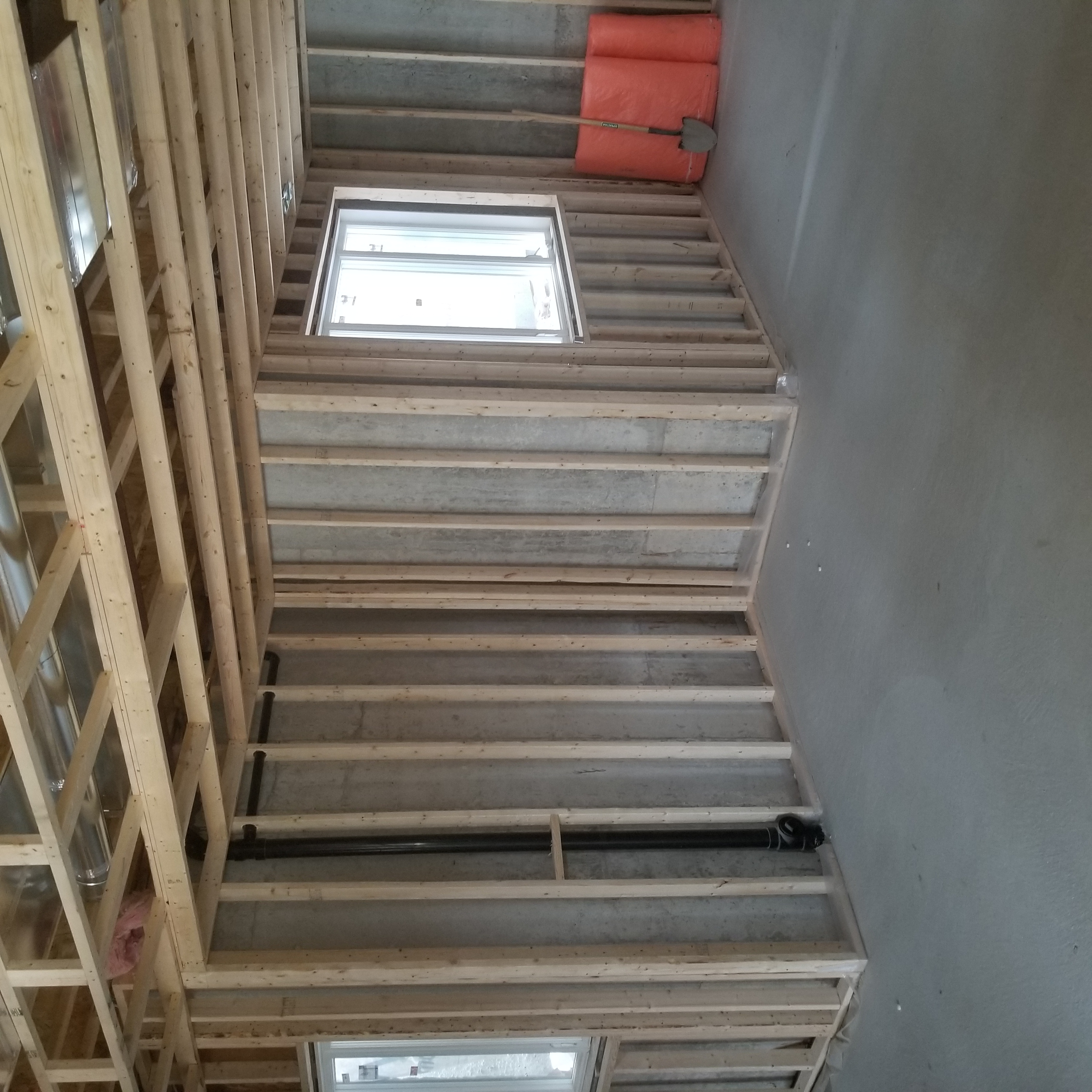
Basement framing is the process of building the wall structure that defines your basement's rooms and spaces. This includes:
- Perimeter walls — framed walls built along the foundation walls, typically with a gap to allow for insulation and moisture management
- Interior partition walls — walls that divide the space into rooms (bedrooms, bathrooms, utility rooms, rec rooms)
- Bulkheads — framed boxes that conceal ductwork, beams, and pipes running along the ceiling
- Window and door openings — properly framed rough openings with headers where required
In most GTA basements, framing is done with wood (2x4 or 2x6 lumber) or steel stud framing. The choice depends on the application and personal preference — both are acceptable under Ontario Building Code.
Does Basement Framing Require a Permit in Ontario?
In most cases, yes. If you're framing a basement to create finished living space — bedrooms, a bathroom, or a recreational room — you'll need a building permit from your municipality. This applies across the GTA including Toronto, Vaughan, Mississauga, Brampton, and Markham.
Permits exist for good reasons: they ensure the work is inspected and meets the Ontario Building Code, which protects you, future buyers, and your insurance coverage. Unpermitted basement work can cause serious problems when you sell your home or make an insurance claim.
Important: Basement bedrooms in Ontario have specific egress requirements — windows must meet minimum size and openability standards to qualify as legal sleeping rooms. This is a life-safety requirement and must be addressed during the framing stage, not after.
What's Involved in a Basement Framing Project
1. Layout and planning
Before a single stud goes up, the layout needs to be planned carefully. Where do the walls go? How do you route around existing mechanical elements like the furnace, water heater, electrical panel, and ductwork? How do you maximize usable square footage while meeting code requirements for ceiling height, egress, and room dimensions?
2. Moisture assessment
Moisture is the enemy of finished basements in Ontario. Before framing, any signs of water infiltration, efflorescence, or dampness on the foundation walls need to be addressed. Framing over a wet foundation wall leads to mould, rot, and a failed renovation.
3. Perimeter wall framing
Perimeter walls are typically built with a gap between the frame and the foundation wall to allow for rigid insulation (required under Ontario Building Code for new basement walls) and to avoid direct wood-to-concrete contact, which can lead to moisture absorption and rot over time.
4. Partition wall framing
Interior partition walls are framed to define each room. This is where decisions about room sizes and layouts get locked in — changes become expensive once framing is complete.
5. Rough openings for windows and doors
All window and door openings are framed with proper headers sized for the span. Egress window openings are sized to meet Ontario Building Code minimums.
6. Blocking and backing
Blocking is installed where you'll eventually need it — for bathroom grab bars, TV mounts, stair railings, and cabinet installations. It's far easier to add blocking during framing than to hunt for studs later.
How Long Does Basement Framing Take?
A typical GTA basement framing project takes between 2 and 5 days for an experienced crew, depending on the size and complexity of the space. Larger basements, those with complex layouts, or projects that require significant bulkhead work will take longer.
What Does Basement Framing Cost in the GTA?
Costs vary based on square footage, complexity, lumber prices (which fluctuate), and the specific scope of work. The best way to get an accurate number is to get a few written quotes from licensed contractors who have seen your basement in person. Be wary of any quote provided sight-unseen — a contractor who quotes without visiting your space is guessing.
What to Look for in a Framing Contractor
- They pull the permit — any reputable contractor will handle the permit application as part of the job
- They visit before quoting — no credible quote is possible without seeing the space
- They're insured — ask for proof of liability insurance before signing anything
- They have a clear scope of work in writing — verbal agreements are not enough for renovation work
- References or reviews — ask to speak with past clients or look for verified Google reviews
Common Mistakes in Basement Framing
- Framing too close to the foundation wall — no room for insulation, leads to code failure and moisture issues
- Skipping the moisture barrier — required between concrete and wood framing under Ontario Building Code
- Undersized egress windows — discovered at inspection, expensive to fix after framing is done
- Not accounting for mechanical — framing that boxes in the electrical panel or blocks HVAC access
- No blocking — adds cost later when finishing and furnishing the space
Basement framing is one of those jobs where the difference between a contractor who knows what they're doing and one who doesn't becomes very obvious — usually at inspection time or years later when problems surface. Getting it right from the start saves significant money and headaches down the road.
Free On-Site Estimate
Across the GTA
We visit your basement, assess the space, and provide a detailed written quote. Serving Toronto, Vaughan, Mississauga, Brampton, Richmond Hill and the GTA.
Request a Free Quote ↗ Call (416) 709-0909